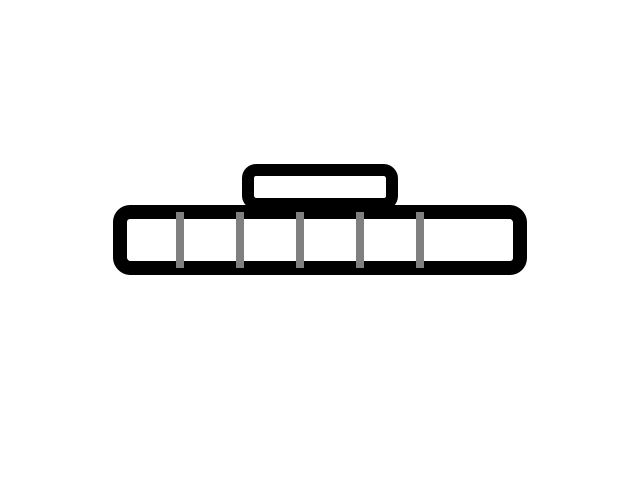
Linear bearing for 20 mm shaft, closed type
- Shaft diameter20 mm
- TypeClosed
- SealSealed
A linear axis is not three unrelated spare parts. The rail sets straightness and carries the bolt pattern; the block sets stiffness, preload and how the load is shared; the shaft bearing is a lower-cost alternative where a round shaft and a simple carriage are enough. Size them together. A rail cut a few millimetres short cannot be stretched, a block with the wrong preload will either deflect or bind, and a round shaft that is not hardened to the right depth will wear in weeks. We supply matched rail-and-block sets from the same production lot at the partner factory, with the rail length, hole pitch, block type and preload written on one packing list, so the two halves of the axis arrive as a pair instead of as two orders that may not fit.
Send the series, the travel length, the load and its direction, and the accuracy you need. If you are replacing a worn axis, measure the rail width, the hole pitch, the block mounting pattern and the overall assembly height — those four values are enough to identify the series without any part number.
Our profiled rails and blocks are supplied to standard 15 / 20 / 25 / 30 series dimensions. A block specified for a given series is compatible with standard 15 / 20 / 25 / 30 series rails of the same series, accuracy class and preload. Rails and blocks described as interchangeable with standard series are matched by rail width, hole pitch, block mounting pattern and assembly height — the four dimensions that actually decide whether the pair will run together.
If your existing axis uses a numbering system you do not recognise, send those four measurements and we will cross-reference them to the correct series, or cross-match the old block to a current one. We state interchangeability only as standard series compatibility. We do not claim any brand authorization, and we do not list third-party brand names as our own products. Put the measurements in the RFQ and we will confirm the fit before quoting.
A linear bearing — often called a linear bushing or a round-shaft bearing — is a sleeve with recirculating ball tracks that slides along a hardened round shaft. It is the simplest and cheapest way to guide a light axis: the shaft carries the bending load, the bearing carries the radial load, and no profiled rail or precision-machined mounting face is needed. Closed types suit a shaft supported only at its ends; open types have a longitudinal slot so the shaft can be supported along its whole length, which is what lets a long axis stay straight under load. Flanged and pillow-block versions bolt straight onto a plate. Typical duties are 3D printers and light automation stages, packaging and labelling machines, measuring and inspection equipment, woodworking guides, medical and laboratory devices, and any carriage that moves in a straight line without a heavy moment load.
Selection starts with the shaft diameter, then the shaft itself: a linear bearing running on a soft or undersized shaft will wear out far earlier than the bearing, so give us the shaft hardness, surface finish, diameter tolerance and straightness, and the unsupported span. State the radial load, any moment load (a cantilevered carriage changes the answer), the travel per cycle, the speed, the duty cycle and the required running accuracy. Choose between a closed, open, adjustable or flanged type, and tell us the housing bore if the bearing is being pressed into a machined block — the fit affects the internal clearance. Add the seal arrangement, whether the bearing should be re-lubricatable or sealed for life, the environment (dust, washdown, clean room) and whether two bearings share one shaft, since coaxial alignment of the two housings is what decides whether the axis binds. If the moment load or accuracy is beyond what a round shaft can hold, we will say so in the first reply and quote a profiled rail and block set instead of selling a bushing into the wrong job.
Put these in the first message: the series (15 / 20 / 25 / 30) or the shaft diameter, the travel length, the load and its direction, the required accuracy or preload, and the mounting pattern. Add the quantity, whether rails and blocks must come as a matched set, and whether end machining is needed — cutting and end machining are handled by our partner workshops, and a rail cut to the wrong length cannot be reworked.
Send the dimensions, the quantity and the destination port in one RFQ. We reply with price, MOQ, lead time and Incoterms.